Elephants, poop paper and procrastination

In 2023 I saw this lovely box of note papers in a fair-trade shop in Boulder, CO. It caught my eye as I was looking for a gift for a friend and we share an affinity for hummingbirds.     
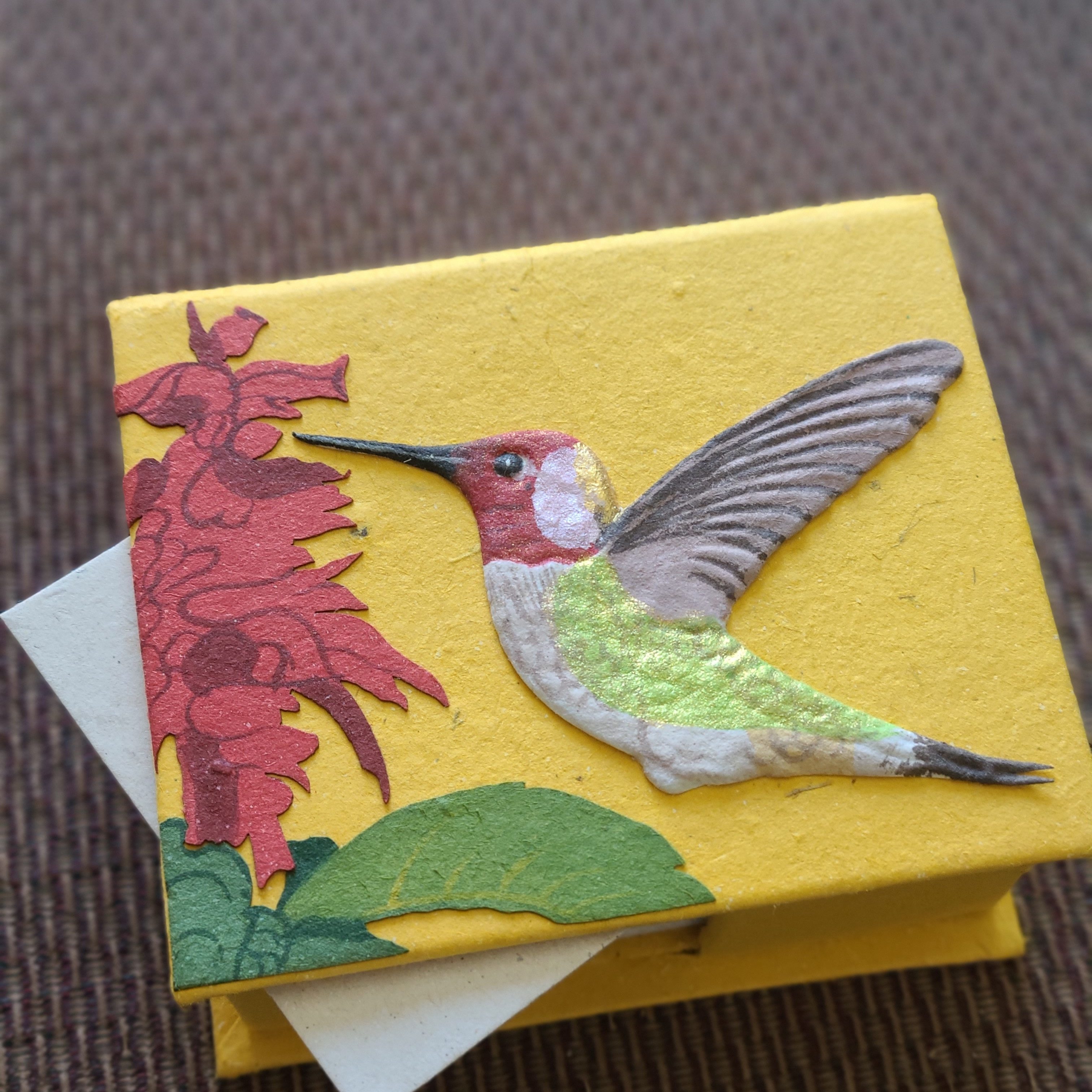
    

Then I discovered the product was made using the dung of elephants in Sri Lanka! What a cool concept!

I adore elephants almost as much as hummingbirds (but not as much as I love Red Pandas, neither of which I can have in my backyard). Also, I happen to love Sri Lanka, as I was lucky enough to visit the island in December of 2018. So of course I bought the note paper for my friend, and one for myself.

While in Sri Lanka we experienced two very different elephant encounters.

The first was going to an elephant ‘rescue’ and we were very excited we would get to ride elephants.  It was not quite the experience I had anticipated. It WAS awe inspiring and humbling to be able to get so close to, touch and even ride these beautiful, amazing creatures. Yet, it was also a bit sad because it didn’t seem like the elephants were very happy or treated well. They didn’t seem treated poorly, I didn’t get a sense of abuse or neglect, just a lack of reverence or kindness. Also, riding elephants is a little scary, and not super comfortable to be honest, so lacking any sense the animal enjoyed the interaction it was rather disheartening overall. We agreed we had no interest in doing that ever again.

A few days later we had a jeep ride through an elephant sanctuary. It was a large area of land allowing lots of space for many free elephants to roam and exist in a more natural way, other than jeeps driving through all the time carrying tourists. What a difference! Of course we couldn’t get close to them, our drivers always maintaining a certain distance, but this felt like a much deeper connection of engaging with the gentle giants. It is truly one of my favorite life experiences to date. My awe, joy and respect for elephants can barely be overstated. Seeing them in the environment where they belong, in the social groups they form, going about their own business was seriously breathtaking. One of our guides aptly reminded us that we humans were the visitors in the elephant’s home. 6 years later, I still get goose bumps thinking about their beauty and strength.

Today, while browsing the internet (and probably should have been doing something more productive) I happened across this story from Business Insider about paper being made from elephant poop in Thailand. Provided with the back story I just gave you, I am sure you know it was a must for me to watch! What a fascinating process, and delightful people making this awesome product! 

Well, I it sure took me down a rabbit hole of memories. But it inspired me to write this post and share with you 2 of these companies making elephant poop paper, supporting sustainable practices, employing local workers and making elephants potentially valued in a whole new way! And a lovely fair trade company with loads of great products! I hope there are more out there to be discovered! So, I guess I will consider this a productive procrastination for today.  

Tell me about any fascinating products like this you may know about!
Is Silicone the new plastic?

Over the past several years there we have seen a lot of positive movement away from single use plastics, as well as the use of alternate materials instead of plastic.

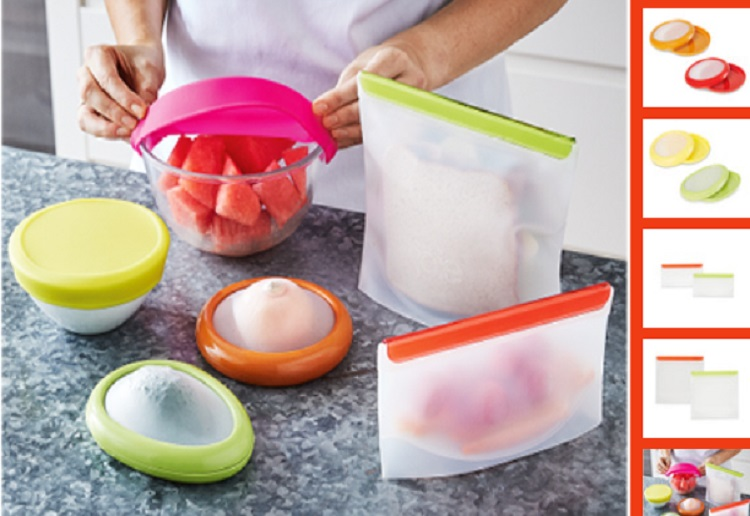
For example, those disposable plastic zipper bags that are so prevalent in our kitchens. We now have zipper baggies made from silicone we can use to stash our sandwiches and snacks, and these can be washed and use over and over again. Great! Right?

Well, of course it is great they are reusable rather than being added to our landfill after a few hours of containing something. Obviously, any time an item has a longer life span instead of being used once and tossed is a step in the right direction. Seeing silicone so often replacing plastic products I began to wonder how positive is this switch, really? Are we embracing silicone so quickly that it’s eventually going to become the new plastic in terms of waste and disposal issues? This is a subject I want to dig into deeper, and plan to write about this often.

I am passionate about learning more and sharing recycling myths, tips, do’s and don’ts and innovations. We have been given the ‘Reduce, Re-Use, Recycle’ mantra for a long time, and we seem to be in a growth phase of understanding better the reality of what each of those words can mean in our lives.

Back to silicone vs plastic: Here is the admittedly VERY oversimplified break down of what I have learned in quick search.

  • Silicone is durable and often used to make alternatives to single use plastic products.
  • While it is technically a recyclable material, it degrades when processed so it is actually considered down cycling.
  • There are very few facilities reprocess silicone at this time.
  • Silicone’s ability to withstand high heat makes it a great material to use in lots of products, yet not so easy to recycle.
  • Silicone in landfills doesn’t seem to be as toxic as plastic, but it actually takes even longer to break down than plastic does.

I am curious to learn more about this and will share my education with you as I go. For me, I plan to keep thinking about the items I use and what the full life span of the materials are. The process from the raw materials to the end of life, as well as how many lives that material can realistically have, are important to me to consider.

What are your thoughts on silicone and how prevalent it is becoming? I would love to hear from you.

My first Kickstarter experience

In July 2019 I backed a Kickstarter concept that I thought looked pretty cool. Not having done Kickstarter before I didn’t really know what to expect regarding delivery on promised goods. I did understand that the whole idea is to provide funding for a new product to be made, it is not just purchasing something that is sitting around a warehouse.

It was a concept for a product I loved the idea of and I felt my financial support towards the campaign is one of the ways to give back or pay forward. The original date the company expected to deliver goods to backers was mid November. I got mine on January 11. This delay didn’t bother me personally, but it sure is bugging a lot of the other backers. I guess sometimes Kickstarter campaigns don’t come through at all.

Anyway, I thought it was worth waiting for! I love it and am excited to share it here with you!

#BYOC

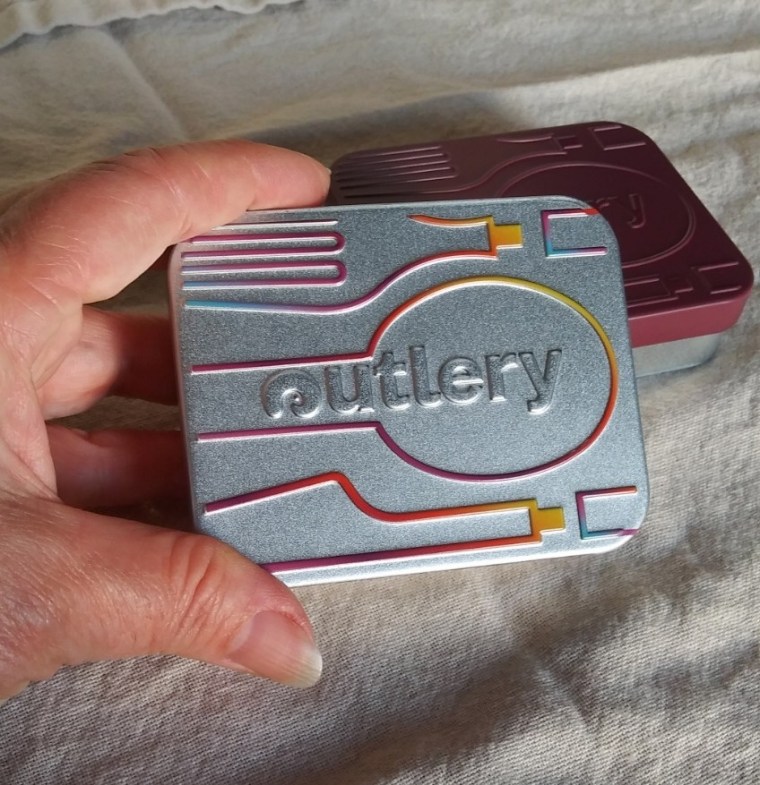
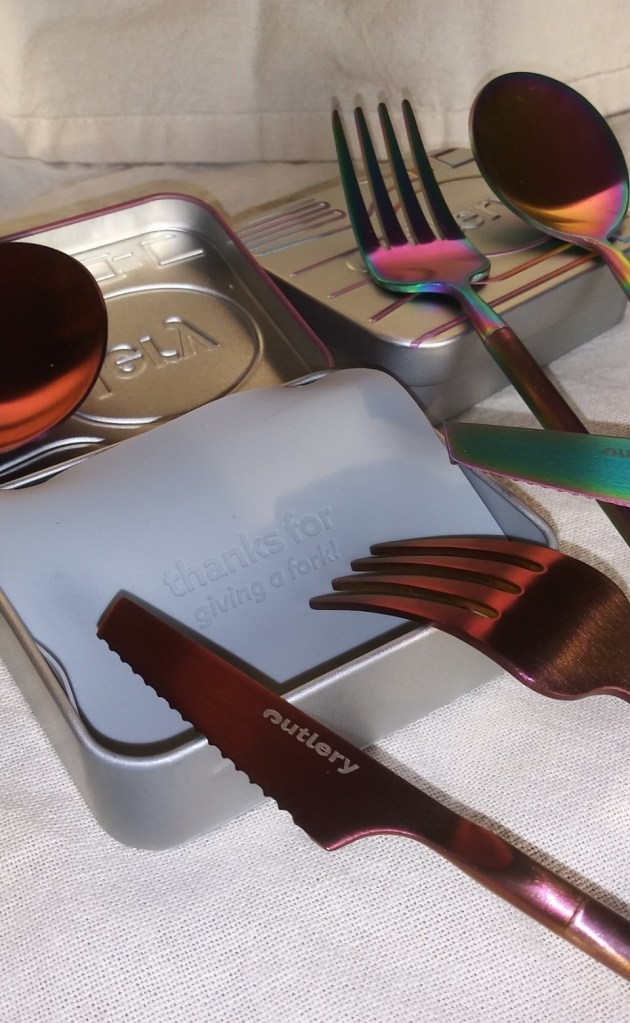
The company is Outlery. Collapsible & Portable Cutlery & Chopsticks Designed To Replace Single-Use Plastic For Good.#BYOC (Bring Your Own Cutlery)

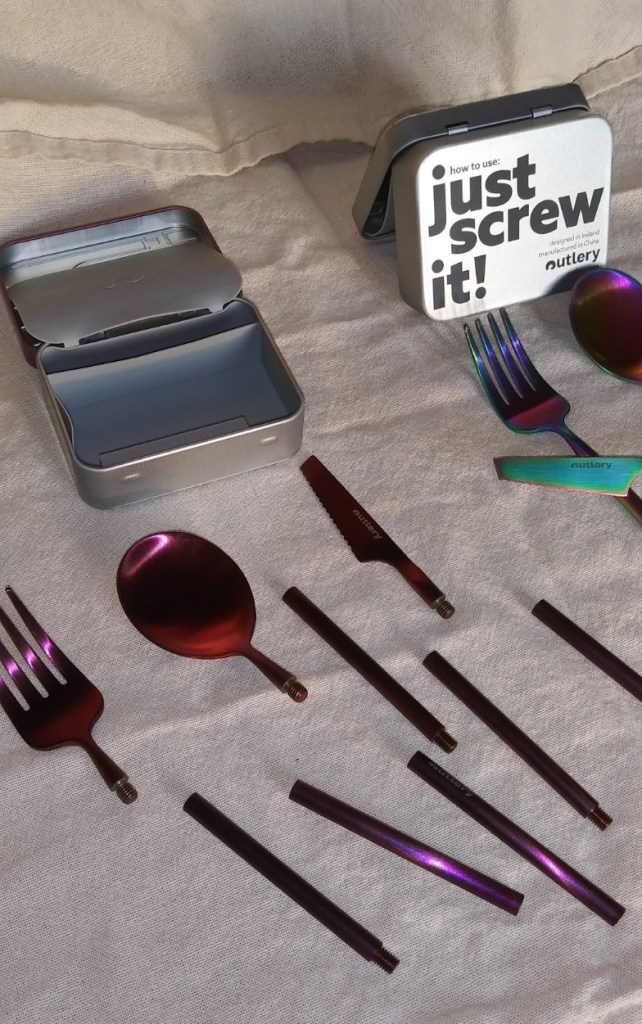
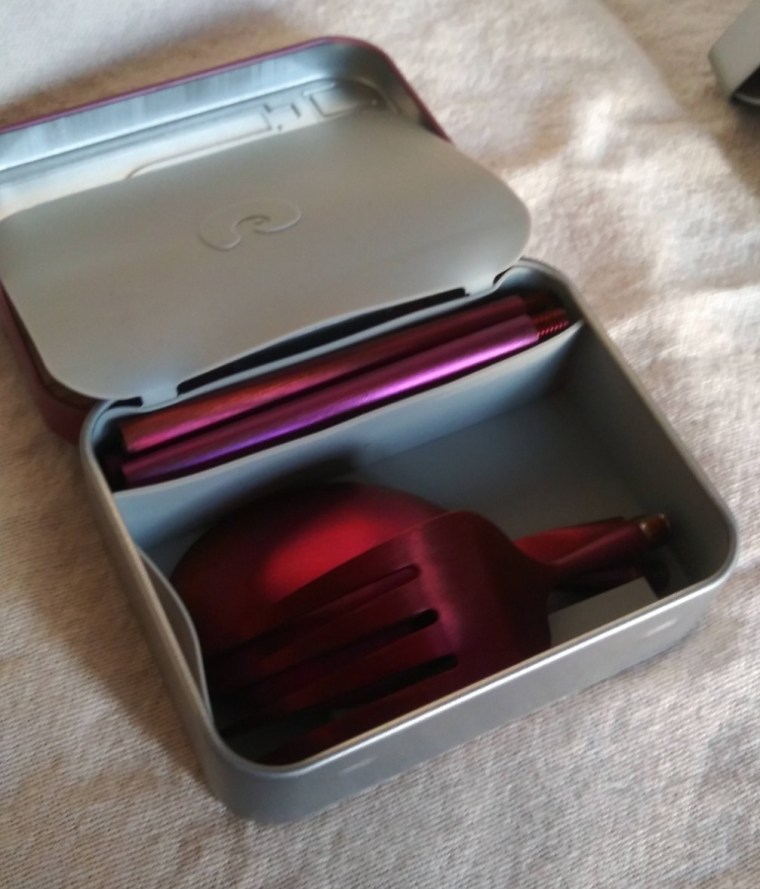
They made a brilliantly compact, collapsible set of cutlery designed for use on the go. It’s main purpose is to provide an alternative to using plastic forks, spoons and knives (and chopsticks). The package the come in is about the size of an Altoid tin and made from recycled tin.

Recycled tin container. About the size of an Altoid tin.

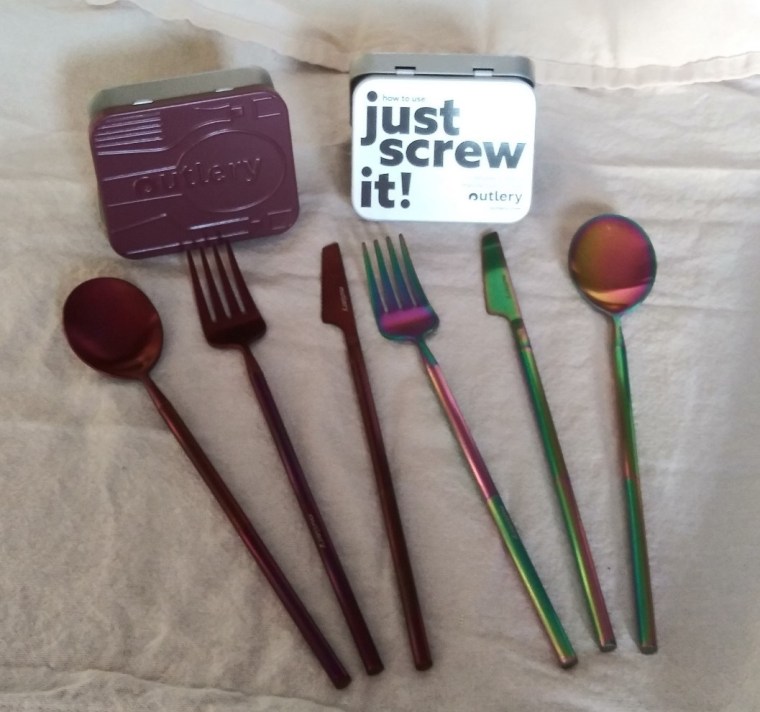
A regular set has 3 heads: Fork, spoon and knife with 2 handle sets. The handles have 2 sections each, that screw together. You can use all 3 utensils with 2 handle sets if you want, just shorter. I chose the option for adding a handle to each of my sets. There were chopsticks available too, but I already carry bamboo chopsticks. Other options they also have are TSA compliant knife head, spork, collapsible straw.

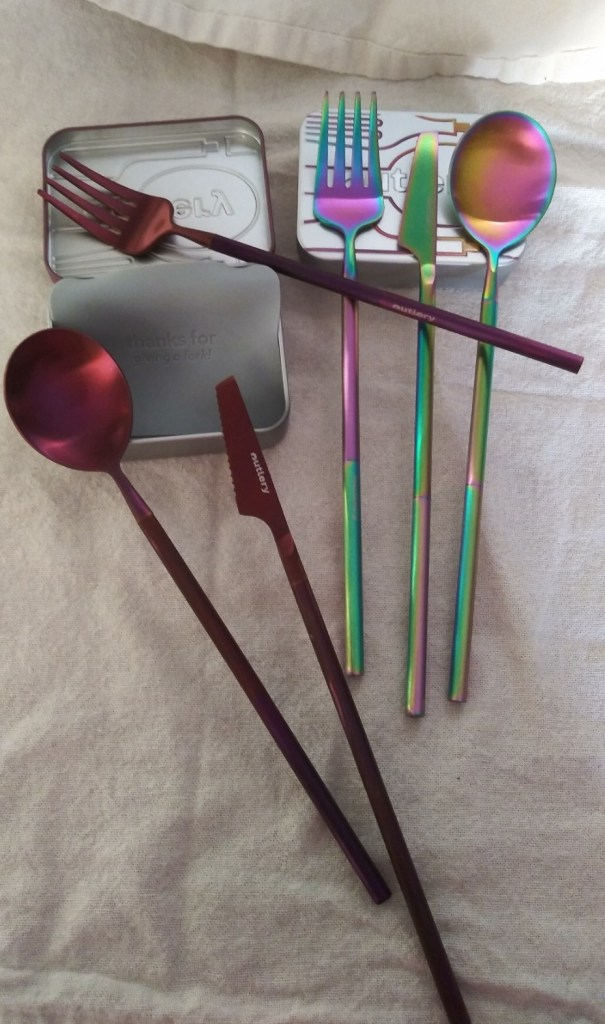
Outlery set in Wine color with extra handles. #BYOC

These lovely sets are light weight, go together and come apart very easily and are very nicely made. It will be easy to remember to keep these with me. Throw them in my purse and I will always be ready! Anyone who works in an office or some other situation where you get stuck with plastic utensils all the time can appreciate this product!

The company is still very busy fulfilling the Kickstarter/Indiegogo commitments, but I think they are hoping to start taking normal orders later this year. I will post any updates I get from them. What do you think of these?

It says ‘Thanks for giving a fork’ on the silicone inner lining. Cute, huh?

Did you know – The impact your clothing can have on the environment?

According to an article in Business Insider Malaysia from October 2019 “The fashion industry emits more carbon than international flights and maritime shipping combined. Here are the biggest ways it impacts the planet.

The article sited a variety of concerns, some of which I had not previously known about. As always, learning more about how we impact the world around us can be an eye opening experience.

I have been reading about ‘fast fashion’ as a problem for a few years now and try to keep it in mind when purchasing clothing. Luckily for me it’s a bit easier than some, I don’t really like shopping much anyway and have rarely followed designer brands or fashion rules. However, even a mostly jeans and t-shirt, thrift store donating and shopping kind of gal like me can always make improvements, so I try to stay informed.

Here are some things to think about:

  • Clothing production doubled the last decade, yet people are keeping items only half as long.
  • That means more clothing is ending up in landfills, or worse – it is burned.
  • Washing clothing releases microfibers into the oceans. Especially items containing polyester.
  • Polyester is a plastic, producing it releases two to three times more carbon emissions than cotton, and polyester does not break down in the ocean.
  • Cotton is better than polyester on the backend, but it is a very water-intensive plant.
  • It can take 2,000 gallons of water to produce one pair of jeans, 700 gallons for one cotton t-shirt.
  • There is a lot of water used and or polluted in the making of most clothing.
  • Dyeing of fabric is also a major contributor to water pollution.

Sounds a bit daunting and depressing to put it together like that, but my goal here is to inform, expand my own base of knowledge and provide inspiration towards positive change.

So. What can I (you, we, all of us) do?

  • Buy less – don’t be a slave to fashion trends or disposable clothing.
  • Wash less when possible. Do you toss a shirt in the laundry after one day of wearing indoors? I’m not talking about your favorite workout outfit that you sweat all over, but really think about what you can wear multiple times between washes.
  • While we are talking about laundry – consider your cleaners and their packaging. More on that in other posts, I promise.
  • Also use cold water, lower drying temperatures or line drying to extend the life of the fabric.
  • Get to know your fabrics and try to make decisions that are gentler to the environment.
  • Learn more about synthetic fabrics that pollute the oceans to avoid.
  • Seek sources of cotton or other materials that are being utilized in more sustainable ways.
  • Shop at and donate to thrift stores, vintage shops. Find creative ways to keep using older clothing.
  • Learn to sew, mend and repair clothing items that begin to wear out. Let’s bring back the popularity of patches!!
  • Seek out recycled and upcycled fabrics. I have a favorite shopping bag made from an upcycled sari.

Most of all and always:

Research, read, educate yourself, share what you learn with others. Be positive, encouraging and non- judgmental because all efforts help. We have a long road to re conditioning ourselves to think about how we are treating this planet. Together we can make difference.

Did you know? Prescription bottles can be re used.

There is something useful you can do with your old prescription bottles? If you put them in your regular curbside collection they will likely go to landfill, but there is a really great alternative.

Pill Bottle Donations

Matthew 25: Ministries accepts donations of empty plastic pill bottles for inclusion in shipments of medical supplies and for shredding and recycling. “Our pill bottle program fulfills the dual needs of improving medical care in developing countries and caring for our environment.”

Of course, it’s great to find ways to re purpose them also, but I was thrilled to know they can be used in this way.

Some of my favorite re uses for the ones I am not donating are simple and obvious.

  •  Putting other pills in them for travel – we buy the very large containers of ibuprofen or vitamins and use old Rx bottles to take smaller amounts in our toiletries bag.
  • Storing bobby pins, q-tips (not the kind with plastic wands), even drill bits in the shop.
  • I sometimes use them when packing lunch for small things that you want to mix in later, like green onions to sprinkle on a soup after you heat it.
  •  They can make a great way to keep quarters gathered up in the car for when you need to fee a parking meter!

There are a lot of crafting ideas on the internet as well.

Hope you find this helpful!


Giving Tuesday

Giving Tuesday is the Tuesday following Thanksgiving and was introduced in 2012 to encourage charitable contributions during a time of much spending and consumerism in the United States.

It has since become a global effort and continues to grow each year.

The idea is not just about sending money to a charity, it is about giving time, sharing kindness, spreading the word about good causes.

Here are some charities or ethical companies I would like to share with you to support:

Habitat for Humanity

Red Panda Network

NAMI – National Alliance of Mental Illness

International Sanctuary  and Purpose Jewelry

SheHeroes

Childhelp

American Red Cross

Humane Society

Any local shelter in your area.

This post was not something I took the time to plan well, but prefer posting something imperfect in hopes of reaching at least a few people, rather than not trying at all. There are so many I would add that I am not thinking of right now.

Go give some good today! Whether it’s dropping your change in the red kettle in front of the grocery store, taking some old clothes to the thrift store, handing a blanket or food to a person on the streets. And if you can donate to an organization today the receives matching funds, that would be really great!

Add your favorite charities in the comments to help spread the word!


Making waste worth something

Food waste turned to electricity

I just read this great NPR article on a story featured on PBS News Hour about dairy farmers in MA using food waste from local stores and other waste from their own farms to convert into electricity.

Food waste sent to landfills will create methane gas on it’s own as it breaks down. This is one of the reasons food waste is such a huge problem we need to address.  When you hear people talk about waste, especially food waste, it isn’t just some moral judgement of our excessive lifestyles that we throw too much away. It directly contributes to the degradation of our planets eco system.

This process of using anaerobic digesters uses waste to create methane gas and trap it so it can be used to make electricity. It becomes a closed loop system. The electricity is used to power the machinery creating it, as well as the rest of the farm and much more.

It is not a wholly new concept. There is a reprint of a 1963 Farm Journal story on Mother Earth News about a methane digester.  

And in Europe there are thousands of the anaerobic digesters currently in use. Hopefully, we will see more solutions like this gain more support here in the U.S. 

It is pretty amazing to think of food waste and cows becoming parts of the solution instead of contributions to the problem. 


Going beyond Reduce, re-use, recycle

For decades we have been told of the 3 r’s concerning waste. but there is a 4th that is even more important.

First we need to re-think. Put consideration into every purchase and think about the entire life span of that item.

As a person who was always  very committed to recycling it became too easy to think I was doing less harm to the environment than I was. But the creation of plastic in the first place is very harmful, and now it turns out that recycling isn’t quite what many of us thought all these years. Even before China started refusing our refuse the process was not very clean or happening as much as we thought. Sometimes our ‘recycling’ was traveling this world to other countries and simply being burned. But that is not really my point.

Plastic, glass, paper, cardboard, metal, wood, bamboo, vinyl. Think of all the source material whatever you are using comes from, and how it is processed. How does it start, what happens as it becomes the item you use, and what happens to it when you are done using it?

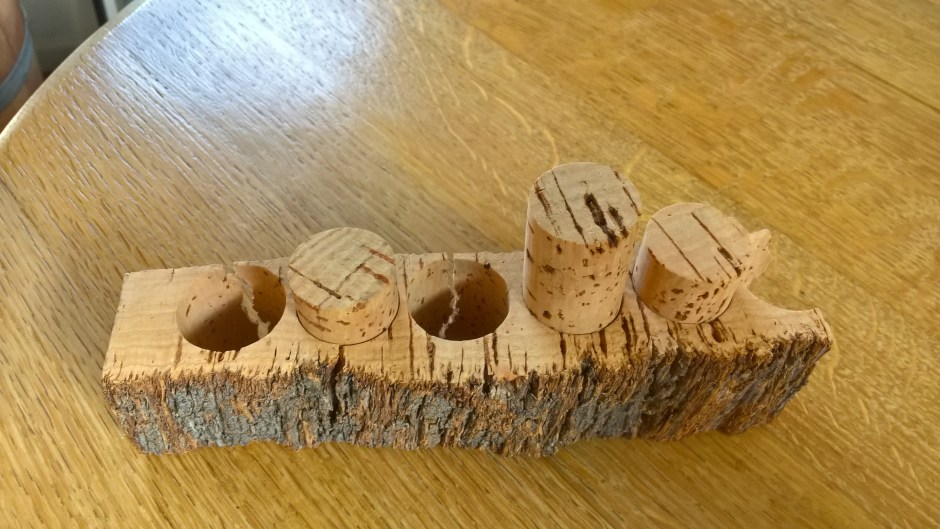
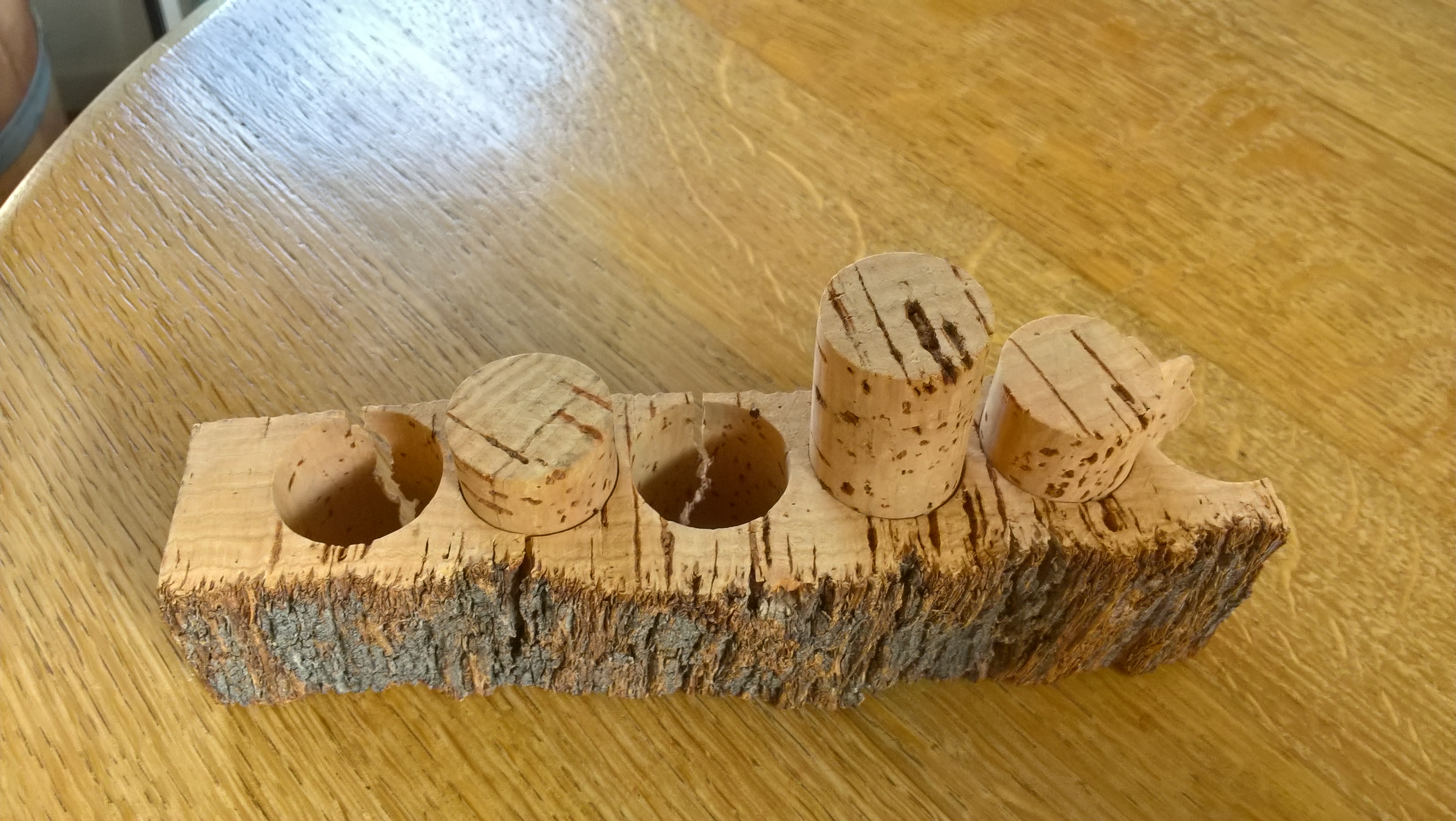
Cork is one of my favorites. Cork is harvested from the bark of the cork oak without harming the tree. It absorbs carbon, it can be recycled into other items and is very low impact to be put to use in the first place.

WP_20171112_14_35_14_Pro

Re-thinking what we buy and use is a subject I plan to get into often here. I hope it will lead to conversations, suggestions and additional awareness for us all. I encourage feedback and comments to further the conversation.